Skip Filling Guide
Fill your skip level with the rim, put heavy items in first, and keep prohibited items out - that's the whole game. Get those three right and collection is smooth, legal and surcharge-free. Here's exactly how.
Why correct filling matters
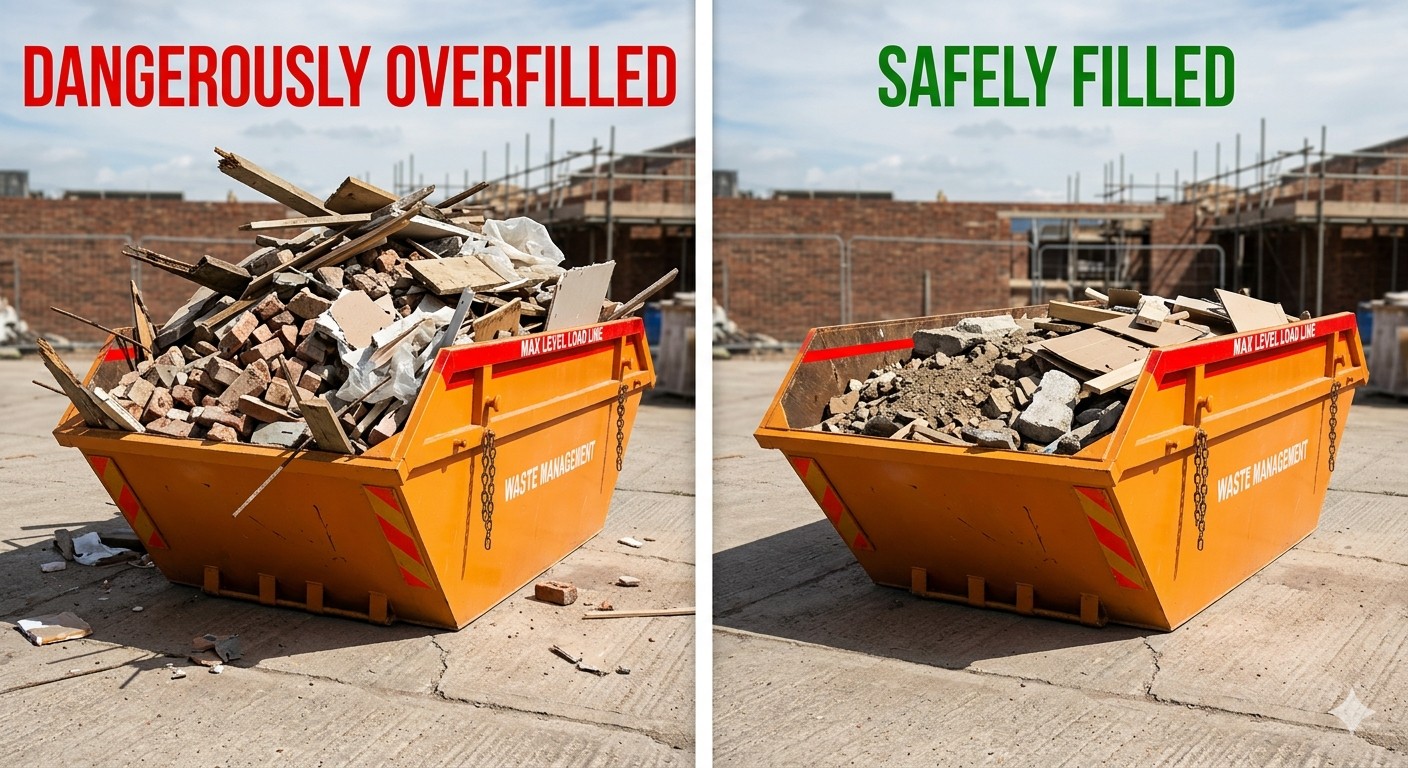
An overfilled skip is a safety hazard and illegal to transport on public roads. Under the Road Traffic Act, loose items falling from a skip can cause accidents - and responsibility sits with the skip company and the customer. An overfilled skip either has excess removed before collection (at your cost) or incurs an overloaded skip surcharge.
The do's and don'ts
Do
- Fill level with the top of the skip
- Break down large items first
- Place heavy items at the bottom
- Distribute weight evenly
- Fill from the back to the front
- Stack flat items vertically against the sides
Don't
- Overfill above the rim
- Put heavy items on top of light ones
- Leave large air gaps
- Mix prohibited items in
- Stack waste beside (not in) the skip
- Compact with machinery without agreement
Tips to maximise the space
- Dismantle furniture - remove legs from tables, take wardrobes apart. Flat pieces stack better.
- Break up timber - cut long planks to skip length so they lie flat instead of sticking up.
- Bag the loose stuff - rubble and small waste goes further in bags stacked neatly.
- Use the corners - pack small items into the corners first, then fill the centre.
- Layer it like a suitcase - heavy flat items first, then bulky items, then loose fill on top.
- Don't rush - ten minutes of organised loading beats paying for a second skip.
Overloaded skip surcharges
An overfilled skip will incur extra charges. If your skip is loaded above the top edge, our driver may need to:
- Remove excess items on site (you keep what comes off)
- Apply an overloaded skip surcharge
- In extreme cases, refuse collection until the load is reduced
Prohibited items
These are banned from general skips under the Environmental Protection Act 1990 and the Hazardous Waste Regulations 2005 - they need specialist disposal, whoever you hire from. Got a specific item in mind? Check it in our skip item checker for an instant answer.
- Asbestos
- Gas bottles & cylinders
- Batteries (all types)
- Paint & varnish
- Solvents & chemicals
- Oils, fuels & petrol
- Tyres
- Fridges & freezers
- TVs & monitors
- Fluorescent tubes
- Medical & clinical waste
- Food waste
- Plasterboard *
- Explosives & ammunition
* Plasterboard can go in a dedicated plasterboard skip - ask us before mixing it with general waste. Mattresses and upholstered sofas also need declaring at booking.
If your skip contains prohibited items: every load is manually sorted at the transfer station, so hidden items are always found. We may refuse collection, charge a contamination fee, or arrange specialist disposal at extra cost. In doubt? Call 03301 339 698 before it goes in - don't guess.
What CAN go in a skip
General skips take most household and construction waste:
- General household waste
- Rubble and bricks
- Wood and timber
- Metal and scrap
- Garden waste
- Soil and earth
- Furniture (not upholstered)
- Plastic and packaging
- Carpet and underlay
- Ceramic tiles
- Concrete
- Clothing and textiles
Weight limits: heavy materials like soil, rubble and concrete should only fill a skip to around half height - the lorry has to be able to lift it legally. Mixing heavy and light waste uses the space most efficiently, and our size guide covers which skips take heavy waste at all.
Ready to book? Check your postcode for live prices or read the rest of the skip hire guides.